
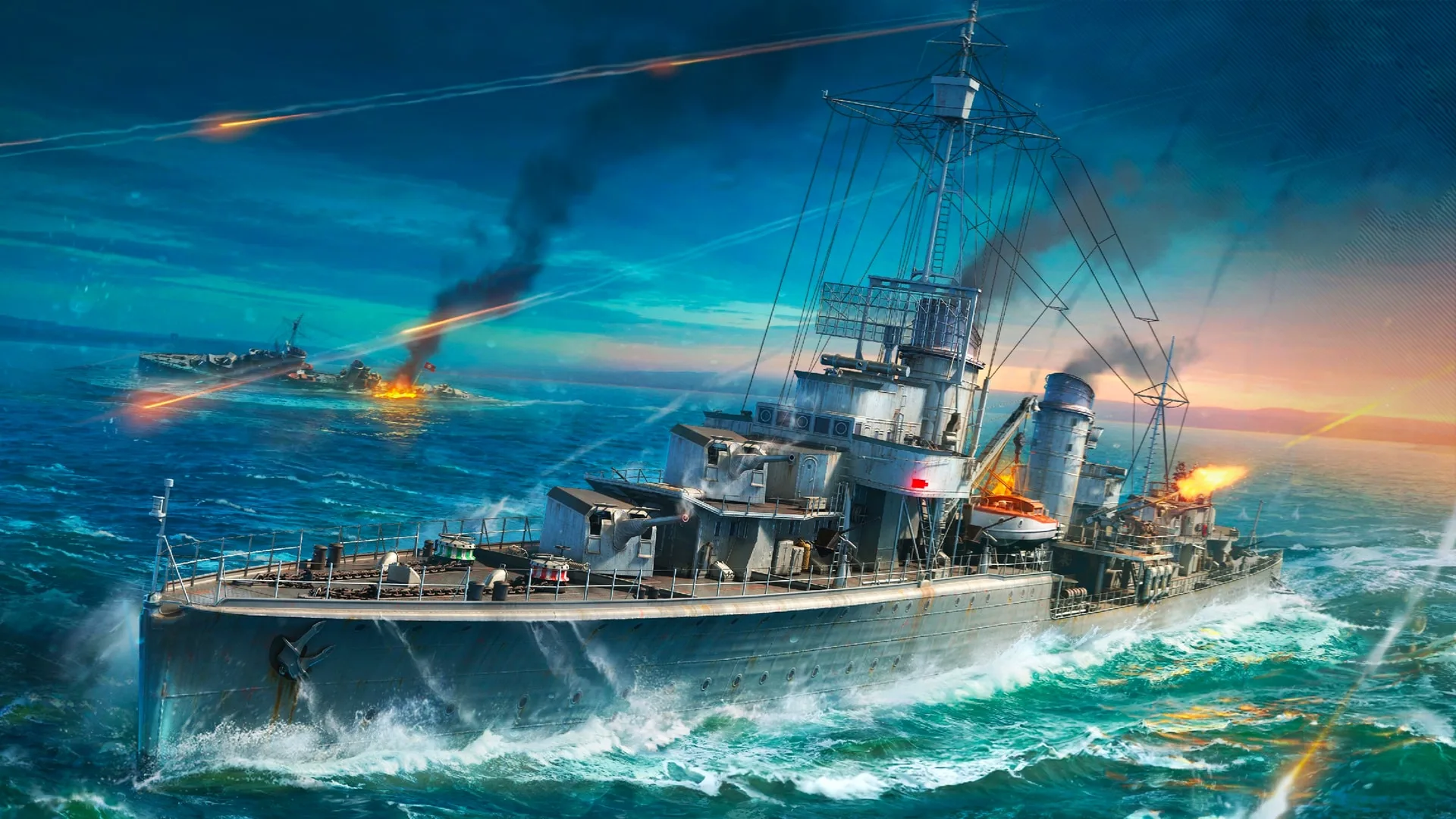
Destroyers are the most impactful class in World of Warships and the most unforgiving. They have no meaningful armor — a single battleship salvo or a burst from a cruiser can kill you instantly. What you have instead is the smallest detection range in the game, the fastest speed, torpedoes, and the ability to spot enemies before they can shoot back. Learning how to play a Destroyer in World of Warships is about learning to survive long enough to use all of that.
Your detection range is your most important stat
Everything in destroyer play revolves around your concealment. Your detection range — the distance at which enemies can see you — is small by design. Stay outside it and you’re invisible. Drift inside an enemy’s gun range and you’re dead.
Before every engagement, know:
- Your detection range (shown in the ship stats panel)
- The detection range of enemy ships in the area
- Whether any enemy radar cruisers are nearby and their radar range
If an enemy cruiser pops radar while you’re capping, you’ll instantly appear on the minimap for the whole enemy team, most of whom will already have guns aimed at the cap. Getting out of radar range alive requires knowing it’s coming — which means watching where radar ships are at all times.
Check radar before you cap
Rushing a capture point without knowing where enemy radar ships are is the most common way to die as a destroyer. Before you push into a cap:
- Check the minimap for radar cruisers — US, Soviet, British light cruisers are the main sources
- Estimate whether they’re close enough to radar the cap
- Either wait for them to use radar elsewhere, position out of their radar range, or bleed their radar with a teammate before pushing
A cap is worthless if you die taking it. Pressure the cap from just outside, be patient, and push when the radar ships are out of position or have used their radar on something else.
Don’t sit in smoke
Smoke is a tool, not a hiding spot. Everybody knows that smoke means someone is in there. Sitting stationary in smoke while 5 enemy ships orbit your puff waiting for Hydro, torpedoes, or radar to flush you out is the fastest way to waste both the smoke and yourself.
Use smoke to:
- Break line of sight when being focused from multiple enemies
- Cover a retreat when bailing from a bad position
- Provide concealment for a friendly cruiser who can fire from it
Then move. A destroyer that smokes and immediately repositions is far harder to deal with than one who camps inside it.
Hard cover beats smoke for surviving
Islands are better concealment than smoke in most situations. No one knows if something is behind an island. Smoke announces your presence. When positioning to hold a flank or wait out a dangerous situation, look for an island to duck behind rather than popping smoke.
Turn off your AA guns
Your AA guns fire at enemy planes before your ship has been spotted, because your AA engagement range extends further than your detection range. Firing AA gives away your exact position to enemy carriers before you’ve been seen — the opposite of what you want.
Turn off AA with the P key at the start of every match and leave it off until you’re already engaged. See how to use secondary guns in World of Warships for the full explanation.
Your role: spotting and map pressure
Your team cannot fire on what they haven’t spotted. Your concealment lets you get close enough to detect enemy ships and relay that to your team without being seen yourself. This is often more valuable than dealing damage — an enemy destroyer you spot for your team’s cruisers is a dead destroyer.
Practical spotting:
- Push toward caps at the start to spot enemy destroyers before they can set up
- Hug the edge of your concealment range when scouting — stay just far enough that you aren’t spotted back
- Relay positions on the minimap with the Alt+click ping
- Don’t go dark right before firing if you can help it — the more your team has to shoot at, the better
Torpedo discipline
Torpedoes are powerful but slow. The standard mistakes:
Firing too early — at long range a target has time to see the torpedo trails and turn. Get closer. 6–8 km is often the ideal torpedo range; close enough to limit dodge time, far enough to arm and not miss point-blank.
Firing at a target moving toward you — torpedoes fired at bow-on ships almost never hit. Wait for the target to turn broadside or angle away.
Hitting friendlies — once launched, torpedoes go where they go. Never fire if there are friendly ships in front of you, and call out torpedo runs in chat. For everything on aiming, see how to fire torpedoes in World of Warships.
Launching into smoke — blindly torping smoke is situationally useful but don’t rely on it. Wait for a spotted target you can properly aim at.
Fighting other destroyers
When you encounter an enemy destroyer, the outcome usually comes down to two things: who shoots first and whose guns are better.
- If you have a gun-focused destroyer (US, Soviet, French), you generally want to fight — turn toward them, open fire, and try to stay out of their torpedo arc
- If you have a torpedo-focused destroyer (Japanese, Pan-Asian), avoid prolonged gun duels at close range. Kite back, launch torpedoes on the disengage, and call in cruisers to finish the job
- Always check whether enemy cruisers are close — fighting a DD within radar range of an enemy cruiser is usually suicide
Knowing when to disengage
The hardest skill in destroyer play. You need to disengage when:
- Multiple enemies are focused on you
- A radar cruiser is closing into range
- Your HP is too low to survive another engagement
- Your team has won the flank and you need to reposition for the next phase
Use your speed. Turn away from danger, use an island for cover if available, and pop smoke on the run if you need to. A destroyer that retreats and survives to contest the next cap is worth more than one that dies heroically.
How do I survive as a Destroyer in World of Warships?
Know your detection range and stay outside enemy detection ranges whenever possible. Check where radar cruisers are before pushing. Don’t sit still in smoke. Keep moving — a destroyer sailing straight is easy to citadel across.
What is the Destroyer’s job in World of Warships?
Destroyers spot enemies for the team, contest and hold capture points, deliver torpedo damage, and pressure the enemy into suboptimal positions. You are not primarily a damage dealer — you are a map control class. Dying early is the worst thing you can do regardless of how much damage you farmed before it.
How do torpedoes work in World of Warships?
Torpedoes are launched from tubes on your destroyer and travel in a fixed path underwater. They arm after a short distance, deal massive damage on contact, and cannot be recalled. You must lead moving targets — aim where the ship will be, not where it is. See how to fire torpedoes in World of Warships for detailed aiming guidance.
Should Destroyers use guns or torpedoes?
Both, but priority depends on the nation. Japanese and Pan-Asian destroyers are primarily torpedo boats — their guns are weak and torpedo damage is their main output. US, Soviet, and French destroyers have strong enough guns to fight other DDs effectively and deal meaningful gun damage. British destroyers fall between: strong AP torps and single-launch torpedoes. Know which type you’re playing and use the appropriate playstyle.
How do I deal with enemy radar as a Destroyer?
Identify which enemy ships have radar before pushing a cap. Keep track of their positions on the minimap. Either stay out of their radar range (~9–12 km for most ships), wait for them to use radar elsewhere, or coordinate with a teammate to bait the radar before you push. Never push a cap blind when radar cruisers are nearby.